Accounting & Finance (ADMIN 513)

By the end of the course, students will be able to:
- Identify common financial statements and understand what the components individually mean and what information is collectively communicated by that financial statement prepared in accordance with GAAP
- Compute the cost of debt and the cost of equity and understand the implications of the capital structure decision
- Perform a basic financial statement analysis by computing common size financial statements and key financial ratios then interpreting the health of the company from such analysis
- Identify relevant and irrelevant costs in common decision scenarios then structure a way to communicate the best decision to others
- Classify costs as direct and indirect and as variable, fixed, or mixed. Divide mixed costs into fixed and variable components using the high low method. Use fixed and variable classifications for budgeting, contribution margin income statements, and cost volume profit analysis
- Allocate common costs to parts of the organization and allocate service department costs to operating departments. Understand the incentives created by allocation and the relevance or irrelevance of such allocated costs to decision making. After allocating costs, evaluate the performance of segments within the organization using return on investment or residual income
- Incorporate knowledge of the time value of money in computing the net present value and internal rate of return of a capital purchase. Also compute and interpret a payback period of the capital investment
- Identify major risks faced by companies and how to manage those risks. Understand some common underlying characteristics of occupational fraud. Learn the COSO framework of internal controls and how internal controls are assessed

Teacher
Shan Roy

Teacher
Maria Juli

Teacher
Rizwan Akram

Teacher
Andre More

Teacher
Diana Andreson

Teacher
Justin Carl
Online
Courses are streamed online in real time from the classroom. You interact with your instructors and fellow students via chat, using Adobe Connect web conferencing software. Assignments and other course materials are delivered through Canvas, a web-based learning management system that also serves as a communications hub.
For added flexibility, each quarter you may view recordings of up to 40 percent of your class sessions instead of attending in real time. You also can attend the classroom sessions in person if space is available.
Blended
Our special blended programs combine the convenience of online study with the vibrancy of in-person classes for a unique learning experience.
Not available for this course
Classroom
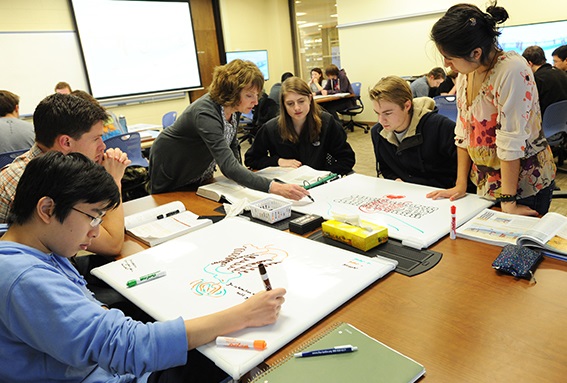
Attend class in person at one of our convenient locations. You’ll engage face to face with your classmates and instructors as part of a highly interactive curriculum. An online learning management system may be required to access some course materials and assignments.
Not available for this course
Course Details
- Locations: Online
- Durations: 9 Weeks
- Class Time: Self-Placed
- Cost: $1,567

More Courses



Tailor Made
Our students achieve excellent results in a wide range of subjects, our short courses include Book Keeping, Computerised Accounts, Finance & Accounting, Business Studies, Employability Skills, Enterprise Skills and more.
Read More
Vocational & Degree
Whether you’re recently graduated from high school or college, or want to advance in your current profession, choose from our diverse range of courses. HNC in Business Management, HNC in ICT (Computing), HNC- Health & Social Care, HNC – Travel and Tourism and more.
Read More